

By Marianne Cornil
What stories do forests tell us when we truly listen? What imaginaries emerge from the rustling of branches, from leaf-covered forest floors, from moss at the foot of ancient trees? The European project „relating forests,” co-funded by the European Union’s Creative Europe programme, brought together four artists through a consortium of three organizations: TheatreFragile (Germany), NOBA – Norwegian Bio Arts Arena (Norway), and Cultures Éco-Actives (France). Together, storyteller Anne Dromzee, choreographer Rebekka Sartre and mask theater makers Luzie Ackers and Marianne Cornil explored these questions through an interdisciplinary artistic approach rooted in local ecosystems and cultural mythologies.
Over the course of a year, the collective immersed themselves in three distinct European forest landscapes: the southern French Alps, Germany’s Teutoburg Forest and the woodlands of Ås in the south of Oslo. In each location, they delved into local myths and observed regional ecosystems, developing site-specific artistic practices that responded to the unique character of each forest.
The artists wove together diverse practices – storytelling, mask theatre, in-situ choreography, eco-acoustic and eco-somatic techniques – creating complex and joyful immersive experiences. Their work invited participants to cultivate a sharpened attention to the living world around them.
The use of masks was one of the approach relaying on ancient rituals. In „relating forests“ masks are more than theatrical props, but as threshold objects capable of awakening “the poetry of a place.” The masks used throughout the project are part of TheatreFragile’s creation “STILL”, which also explores relationships between humans and the living forest. The artists sought to capture their transformative essence: the capacity to embody non-human entities and facilitate passage between states of being. Created by artist Luzie Ackers, these masks were deployed in public performances and in participatory workshops.
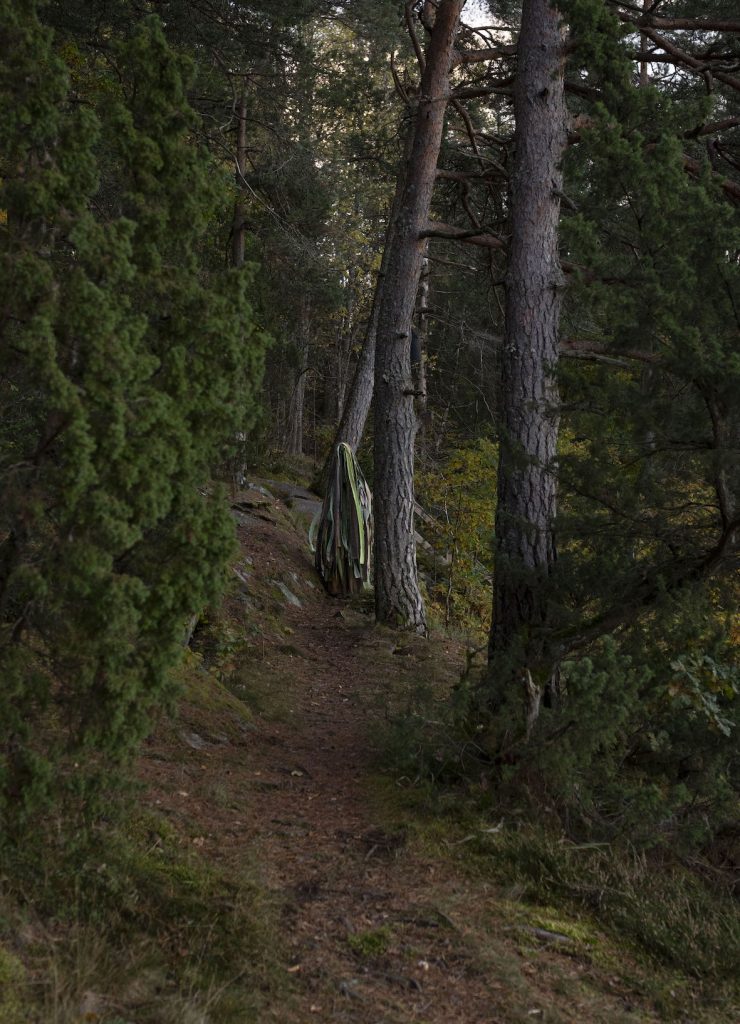
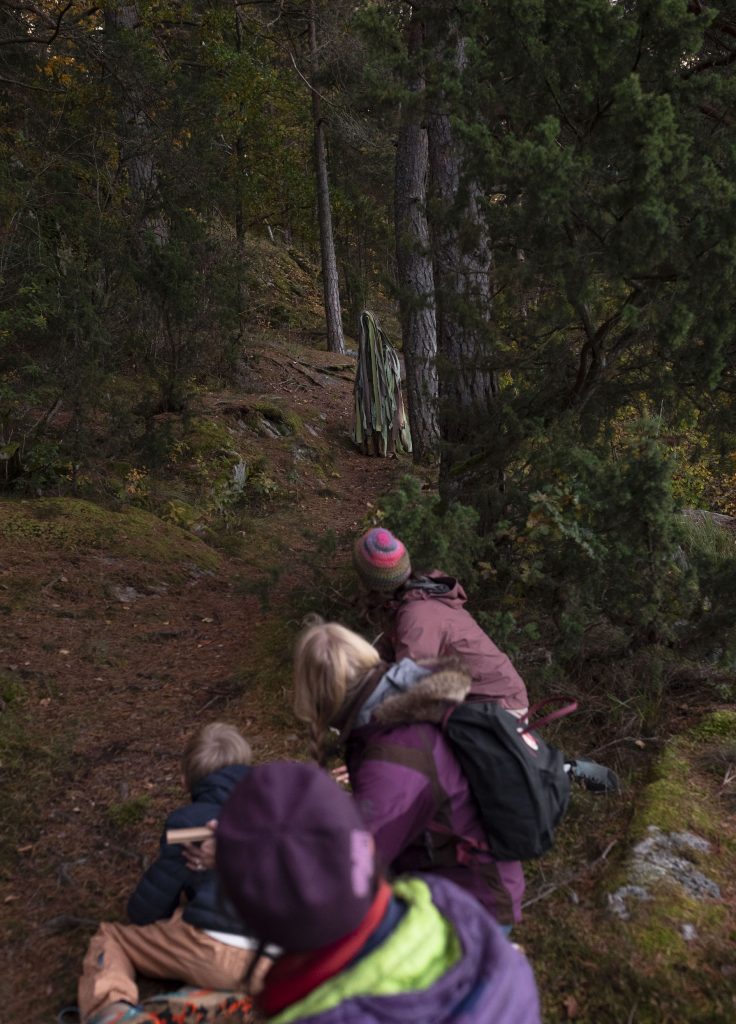
During the project, the collective engaged in ongoing exchanges and welcomed contributions from experts in performance study, biology, philosophy, and social sciences. This interdisciplinary dialogue helped them conceptualize and test various transmission formats with different audiences: schoolchildren, teenagers, and adults participated in workshops and performance walks.
The forests themselves became collaborators in this process. In the French Alps, larch trees and owls from the Écrins National Park joined the narrative. In Germany’s Teutoburg Forest, beech trees stood alongside tales from the Brothers Grimm and the enigmatic figure of Hackesusa. In Norway, trolls emerged from local mythology while traditional songs echoed through the woodland, connecting participants to centuries of Nordic forest culture. Each forest revealed its own distinctive voice, yet all spoke a shared language of interconnection between human imagination and the living world.
„relating forests” demonstrates how artistic practice can foster deeper connections between people and forest ecosystems. By combining creative expression with scientific insight and local knowledge, the collective has developed approaches that help participants listen more carefully to what forests have to tell us – not just as natural resources, but as living communities with their own voices and stories.
In February 2026, the consortium will publish a report offering insights into the artistic approaches developed throughout the project and documenting the experiences of participants on https://www.theatre-fragile.de/.
Image credits: Linnea Syversen
